English
 简体中文
简体中文
 Русский
 Español
 Árabe
Árabe
 日本語
日本語
 한국어
한국어

How to Develop Dog Diapers for Different Breeds and Usage Needs
Meta Title
How to Develop Dog Diapers for Different Breeds and Usage Needs
Meta Description
Learn how to develop dog diapers based on pet size, body shape, absorbency, fit, fastening, comfort, usage scenarios, and private label requirements.
After developing pet training pads, brands and distributors may consider adding dog diapers to create a more complete pet hygiene range.
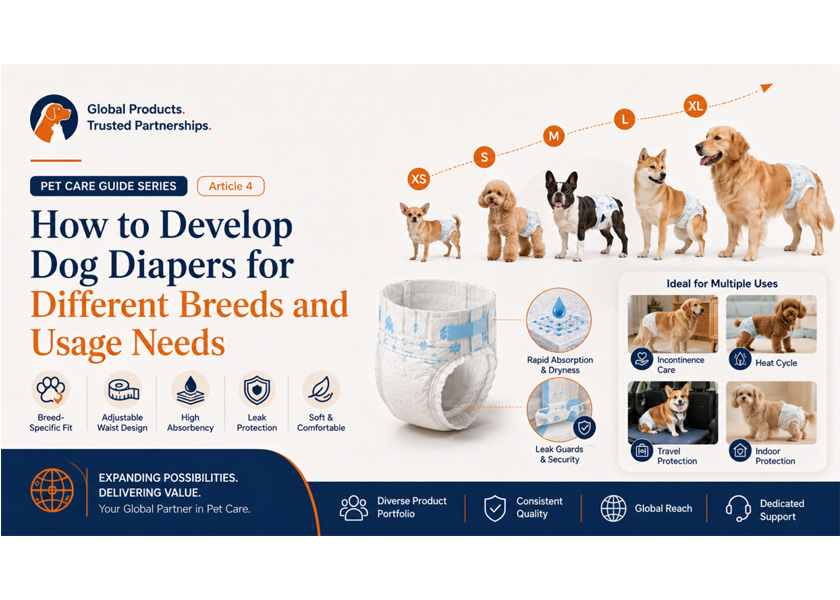
Dog diapers are used in a variety of situations, including female dogs in heat, senior pet care, urinary incontinence, post-surgery recovery, travel, excitement urination, and temporary indoor protection.
Although dog diapers and human hygiene products use some similar absorbent materials, the design requirements are very different.
Dogs vary significantly in breed, waist size, body length, tail position, leg shape, activity level, and coat thickness. A diaper with good absorbency may still perform poorly if it does not fit correctly.
For this reason, successful dog diaper development must balance absorption, comfort, fit, fastening, and ease of use.
Identify the Main Usage Scenario
Before selecting a product structure, buyers should define the main reason the diaper will be used.
Different scenarios may require different features.
Female Dogs in Heat
Diapers for female dogs in heat generally focus on:
· Comfortable fit
· Moderate absorption
· Secure fastening
· Tail-hole positioning
· Breathability
· Easy replacement
These products may be worn for extended periods, so softness and fit are particularly important.
Senior Dogs and Incontinence
Senior pets or dogs with urinary incontinence may require:
· Higher absorbency
· Stronger leak protection
· Lower rewet
· Comfortable elastic
· Reliable fastening
· Clear size guidance
The product may need to manage larger liquid volumes than products designed mainly for dogs in heat.
Post-Surgery or Recovery
Recovery situations may require gentle materials and a design that does not place excessive pressure on sensitive areas.
The product should also be easy for the owner to apply and remove.
Any medical or therapeutic claims should be handled carefully and supported appropriately.
Travel and Temporary Indoor Use
Travel products may emphasize:
· Convenience
· Compact packaging
· Reliable short-term protection
· Easy disposal
· Secure fit during movement
These products may be marketed together with training pads or other travel accessories.
Excitement or Submissive Urination
For occasional light leakage, buyers may prioritize comfort, flexibility, and easy application rather than maximum absorbency.
Understand the Main Product Types
Dog hygiene products may be developed in different formats.
Full-Coverage Dog Diapers
Full-coverage diapers wrap around the rear body and generally include a tail hole.
They may be used for female dogs, senior dogs, incontinence, or post-surgery care.
These products require careful sizing because waist fit, body length, and tail position all affect performance.
Male Dog Wraps
Male dog wraps are designed to cover the waist and urinary area without covering the full rear body.
They may be used for marking, light incontinence, or temporary indoor protection.
Male wraps require a different shape and size system from full dog diapers.
Reusable and Disposable Products
Disposable dog diapers offer convenience and hygiene, while reusable products may appeal to customers seeking washable options.
A brand should define clearly whether it is entering the disposable, reusable, or mixed segment.
The materials, packaging, price, and consumer expectations differ significantly between these categories.
Size Development Is the Most Important Step
Sizing is one of the main reasons for customer complaints in dog diapers.
A simple small, medium, and large classification may not be enough unless it is supported by clear measurements.
Buyers should confirm:
· Recommended waist circumference
· Product width
· Product length
· Tail-hole size
· Tail-hole position
· Elastic range
· Fastening overlap
· Suggested pet weight
· Suitable breed examples
Waist circumference is usually more useful than body weight alone because dogs of the same weight can have very different body shapes.
Breed examples can help consumers, but they should only be used as general references.
Consider Different Dog Body Shapes
Dog breeds differ in ways that can affect fit.
Long-Bodied Dogs
Breeds with longer bodies may require greater product length or adjusted fastening placement.
Deep-Chested or Narrow-Waisted Dogs
Some dogs have a large difference between chest and waist dimensions.
The rear-body fit may require more flexible elastic or a broader adjustment range.
Small Dogs
Small dogs need lighter materials and appropriately positioned tail openings.
A product that is too bulky may restrict movement.
Large Dogs
Large sizes require stronger fastening, larger absorbent cores, and better structural stability.
The product must remain secure when the dog walks, sits, or lies down.
Dogs with Thick Coats
Thick fur can affect waist measurement and adhesive or fastening contact.
The fastening system should allow adjustment without pulling the coat excessively.
Key Structural Features
Soft Top Sheet
The inner surface should feel soft and allow liquid to enter the absorbent core efficiently.
Because the product may remain in contact with the dog’s skin and fur, surface comfort is important.
Absorbent Core
The core may combine fluff pulp and SAP.
The correct balance depends on the usage scenario, size, expected wearing time, and target price.
Larger sizes may require not only more absorbent material but also a properly shaped core that covers the necessary area.
Leak Guards
Three-dimensional leak guards can help reduce side leakage.
Their height, elasticity, softness, and position should be tested carefully.
Leak guards that are too stiff may cause discomfort, while weak guards may not provide enough protection.
Waterproof Outer Layer
The outer layer should resist leakage while remaining flexible.
A cloth-like outer surface may improve appearance and comfort, while a conventional film may provide a more economical option.
Waist Elastic
Elastic should provide a secure fit without excessive pressure.
The front and rear waist design can affect how well the diaper remains in place during movement.
Fastening Tapes
The fastening system should allow adjustment and remain secure during use.
Buyers should evaluate:
· Tape width
· Adhesive strength
· Refastening capability
· Landing-zone strength
· Resistance to movement
· Ease of use
Repeatedly adjustable tapes may improve usability, especially when owners need to check the fit before final fastening.
Tail Hole
The tail hole must be correctly positioned and appropriately sized.
If it is too large, leakage may occur. If it is too small or badly positioned, the product may be uncomfortable or difficult to apply.
Elastic around the opening may improve fit.
Fit and Comfort Testing
A diaper should be evaluated on actual dog body shapes whenever possible.
Important observations include:
· Whether the product stays in place
· Whether the tail hole aligns correctly
· Whether the leg areas are too tight
· Whether gaps appear around the waist
· Whether the diaper restricts movement
· Whether the fastening remains secure
· Whether leakage occurs after walking or sitting
· Whether the surface remains reasonably dry
Testing should include different breeds or body shapes within the same size range.
Absorbency and Leakage Requirements
Absorbency should match the product’s intended use.
A diaper for female dogs in heat may not need the same core as a product for senior dogs with urinary incontinence.
Buyers should evaluate:
· Liquid penetration speed
· Core absorption
· Rewet
· Side leakage
· Back leakage
· Core movement
· Performance after pressure
· Performance during movement
Overloading the product with absorbent material may increase bulk and reduce comfort. The aim is to create the right balance, not simply the heaviest product.
Packaging and Size Communication
Clear packaging can significantly reduce sizing-related complaints.
The package should show:
· Product type
· Intended use
· Waist range
· Suggested pet weight
· Size chart
· Measurement instructions
· Tail-hole design
· Quantity per pack
· Application steps
· Disposal guidance
· Important cautions
Illustrations can help consumers understand how to measure the dog and apply the diaper.
For online retail, the same size information should appear clearly in product images and descriptions.
Product Positioning
Economy Products
Economy dog diapers may focus on:
· Standard absorbency
· Basic materials
· Simple packaging
· Limited size range
· Cost-efficient fastening
Even at an economy level, fit and leak protection should remain reliable.
Mainstream Products
Mainstream products may include:
· Broader size options
· Better elasticity
· Improved fastening
· Soft surfaces
· Leak guards
· Clear size charts
· Attractive retail packaging
Premium Products
Premium products may offer:
· Softer materials
· Higher absorbency
· Lower rewet
· Improved breathability
· More flexible fit
· Refastenable tapes
· Better odor management
· Enhanced packaging
Premium claims should reflect real product differences.
Developing a Complete Product Range
A dog diaper range may include:
· Multiple sizes
· Female dog diapers
· Male wraps
· Economy and premium versions
· Small trial packs
· Standard retail packs
· Larger value packs
New brands do not necessarily need to launch all options at once.
A more practical approach may be to begin with the most common sizes and a clear primary usage scenario, then expand based on sales and customer feedback.
Dog diapers can also be combined with:
· Pet training pads
· Disposable cleaning products
· Travel accessories
· Senior pet care products
This can help create a stronger pet hygiene category.
Sample Evaluation Before Production
Before confirming an order, buyers should check:
· Product measurements
· Waist elasticity
· Tail-hole position
· Fastening strength
· Surface softness
· Core placement
· Absorption speed
· Total absorbency
· Rewet
· Side leakage
· Product thickness
· Packaging clarity
· Size consistency
Testing only one size is not sufficient. Each size should be reviewed because proportions and fit may change across the range.
Working with an OEM Partner
Dog diaper development requires close communication between the buyer and supplier.
The supplier should understand:
· Target dog sizes
· Intended usage
· Absorbency requirements
· Material preferences
· Fastening design
· Packaging format
· Retail positioning
· Testing expectations
At Kilo-Promise, we support customers with disposable dog diaper development, specification confirmation, size selection, private label packaging, sample preparation, production follow-up, and export coordination.
Conclusion
Dog diaper development is more complex than simply adding an absorbent core to a wearable product.
Successful products require careful attention to usage scenario, body shape, size range, tail-hole placement, elasticity, fastening, absorbency, leak protection, and packaging communication.
A well-designed size system can reduce customer complaints and improve repeat purchasing, while a suitable product structure helps balance comfort and performance.
After building a dog hygiene range, brands may look toward cat products to expand their portfolio. Cat litter is one of the most important repeat-purchase categories, but product selection can be challenging because material preferences, dust control, odor performance, clumping, and packaging vary significantly between markets.
In the next article, we will explain how to choose the right cat litter for a brand and sales channel.